

Contents:
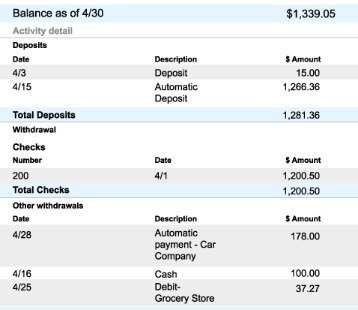
The next step is basically a game of match. You’ll want to look at your statement, starting with the first transaction listed and find that same transaction in the Reconciliation window in QuickBooks. If they match, put a checkmark next to the amount. This marks that transaction as reconciled. Continue this through the whole statement. If your accounts are connected to online banking, make sure youmatch and categorize all of your downloaded transactions.
- https://maximarkets.world/wp-content/uploads/2020/08/forex_education.jpg
- https://maximarkets.world/wp-content/uploads/2020/08/logo-1.png
- https://maximarkets.world/wp-content/uploads/2020/08/forex_team.jpg
- https://maximarkets.world/wp-content/uploads/2019/03/MetaTrader4_maximarkets.jpg
Or maybe you have a habit of not canceling your incorrect check when you write a new one for the correct amount. These and other bad bookkeeping habits may result in major discrepancies between the numbers you see in QuickBooks and the amount of money in your bank account. So when you have to write a big check relying on your QuickBooks balance, you may end up over-drafting your bank account. Review the reconciliation report and print a hard copy of the reconciled statement when you’re done, which is available in both detailed and summary formats.
Tips to Reconcile Bank Statement in QuickBooks Online?
When you reconcile a bank statement, you match each transaction with your records to verify that the amounts coincide. When reconciling an account, the first bit of information you need is the opening balance. Start by reviewing a previous reconciliation report. If you reconciled a transaction by mistake, here’s how tounreconcile it. If you adjusted a reconciliation by mistake or need to start over, reach out to your accountant.

Reconciliation is a great practice to add to your business to-do list. You can easily roll it into other month end tasks you work on to keep up on the state of your company. While not required, keeping a close eye on your books and what’s coming in and out can save you from a lot of issues in the future.
Next Steps: Review the reconciliation
This import transactions into xero is called “reconciling,” and it’s an important part of accounting. Accurate financial reports that are delivered in a timely and consistent manner are a weapon. You should have a custom set of reports for your business that you can use to make decisions. Whether you want these reports daily, weekly, or monthly depends on you; just make sure that you hold your bookkeeper accountable to your deadline.

You may even look forward to completing a bank reconciliation. To make reconciling easier, you can sort transactions by date or hide transactions dated after the statement date. You can also set up transactions by specific columns such as date, payee, check number, and amount. Under the drop-down menu, click on the word “Accounts.” From there, select the account you want to reconcile. In the early 2000s, Intuit launched QuickBooks Online. And, according to a news release by the manufacturer in 2017, the platform now has over 2.2 million users worldwide.
Step 3: Compare your statement with QuickBooks
C means cleared through the bank and checked off but not reconciled. On the other hand, R means reconciled. Transactions with R status will no longer show up on the next reconciliation screen at all.
Essentially being delinquent in completing this critical bookkeeping activity sets you up for accounting failures. Click on the Gear button, then on “Tools” and then “Reconcile.” Click on the drop-down menu under “Accounts” and select the account you want to reconcile. Enter the “Ending balance” and “Ending date” based on your bank statement information. Match transactions to your bank statement and check them off one by one. Reconciling your books simply means comparing your financial statements and records to those from external sources, such as your bank or credit card company. Your books should always match up with these external documents, confirming that every transaction you have recorded is complete and valid.
- https://maximarkets.world/wp-content/uploads/2020/08/forex_trader.jpg
- https://maximarkets.world/wp-content/uploads/2021/06/platform-maximarkets-4.jpg
- https://maximarkets.world/wp-content/uploads/2019/03/Platform-maximarkets-2.jpg
- https://maximarkets.world/wp-content/uploads/2020/08/ebook.jpg
Your task is to make sure everything matches. In the end, the difference between QuickBooks and your bank accounts should be US $0.00, although processing payments can sometimes cause a small gap. Because all of the needed information is right there, it makes it incredibly easy—if a bit time-consuming—to compare it to your bank statements. The former will only be shown on the bank statement, while the latter will only be reflected on your internal accounting records. Likewise, you can spot any accounting errors or suspicious-looking entries that may be fraud attempts on your account’s funds.
The cloud-based https://bookkeeping-reviews.com/ is easy to use, has advanced invoicing and tracking features, mobile apps, and built-in sales, inventory, and custom-user functions. Next, select the “Reconcile” button. This will open a new window where you can select the account you want to reconcile. The word “reconcile” comes from the word “reconnaissance,” which means to explore, examine, or investigate. This is a good way to think about reconciliation in QuickBooks.
If not follow all the above steps until your bank statement is 0. When you create a new account in QuickBooks, you pick a day to start tracking transactions. You enter the balance of your real-life bank account for whatever day you choose. This starting point is the opening balance. We recommend setting the opening balance at the beginning of a bank statement. This makes your first reconciliation much easier.
By following the steps outlined in this article, you’ll be able to ensure that your accounts are accurate and free of any errors that could hurt your company. When you reconcile in QuickBooks Desktop, you go through each of your transactions and compare the debits and credits. If you find a difference between the two, then you need to find out where the mistake was made. To reconcile in QuickBooks Desktop, you can follow these simple steps. C is Cleared and would be from accepting a green match in the Review screen.
If you want to modify the transaction’s status, you can tap on the checkbox to change the letter. Sometimes users make a reconciliation adjustment to force an account in QuickBooks to match their bank records. You shouldn’t do a reconciliation adjustment without your accountant’s guidance. And if you fix the errors later on, an adjustment causes problems down the road. Look for any transactions on the report that aren’t on your bank statement. If they aren’t on your bank statement, they shouldn’t be on your reconciliation.
It’s recommended to reconcile your checking, savings, and credit card accounts every month. Once you get your bank statements, compare the list of transactions with what you entered into QuickBooks. If everything matches, you know your accounts are balanced and accurate. When you reconcile, you compare two related accounts make sure everything is accurate and matches. Just like balancing your checkbook, you need to do this review in QuickBooks. You should reconcile your bank and credit card accounts in QuickBooks frequently to make sure they match your real-life bank accounts.
Knowing how to reconcile in QuickBooks can help keep your account data as accurate and up to date as possible. If you don’t reconcile your accounts and depend solely on your bank statement balance to run your business, it’s like playing Whac-A-Mole. Every month your business receives either a paper or email copy of your bank statement. When it arrives in your mailbox or inbox, it’s your cue to reconcile your financial records with your bank’s monthly history of transactions.
Switching to Xero from AccountEdge – TidBITS
Switching to Xero from AccountEdge.
Posted: Mon, 10 May 2021 07:00:00 GMT [source]
Once you check off everything you should see the difference go to $0.00 with a green checkmark. This report shows any missing checks. These may be throwing off the ending balance of your reconciliation.

You can also check about reconciling an account in QuickBooks Online for more details. Please let me know if you have other questions in mind. Scroll through the transactions listed in the Checks and Payments section of the Reconcile window; find the first check; and then click it. You also can highlight it by pressing Tab and an arrow key. A QuickBooks transaction report may display a C, R, or nothing in the CLR column of the report, or in the Register. C means cleared and R means reconciled.
Are you one of the more than two million people who use QuickBooks for their business’ financial and operational needs? If so, you know that the tool is robust enough to handle large-scale transactions but nimble enough to support fledgling startups. To get the most use out of your software investment, it pays to know your way around all of its features. One of those is the QuickBooks reconciliation feature.
Leave a Reply